Choosing the right weight for home dumbbells can be daunting. According to fitness expert Dr. Jane Frazier, "The best weight is one that challenges you without compromising form." This highlights the importance of selecting a weight that fits your unique fitness level.
When considering how to choose the right weight for home dumbbells, it's crucial to reflect on your personal goals. Beginners might start with lighter weights of 5 to 10 pounds. Meanwhile, advanced users may require 20 pounds or more to ensure effective muscle engagement.
Weight selection varies based on individual strength and workout type. For instance, you might lift heavier for squats but use lighter weights for shoulder presses. It's not uncommon to feel uncertain about your choices. Therefore, experimenting and adjusting weights as you progress can lead to growth and improvement. Always prioritize safety over lifting heavier.
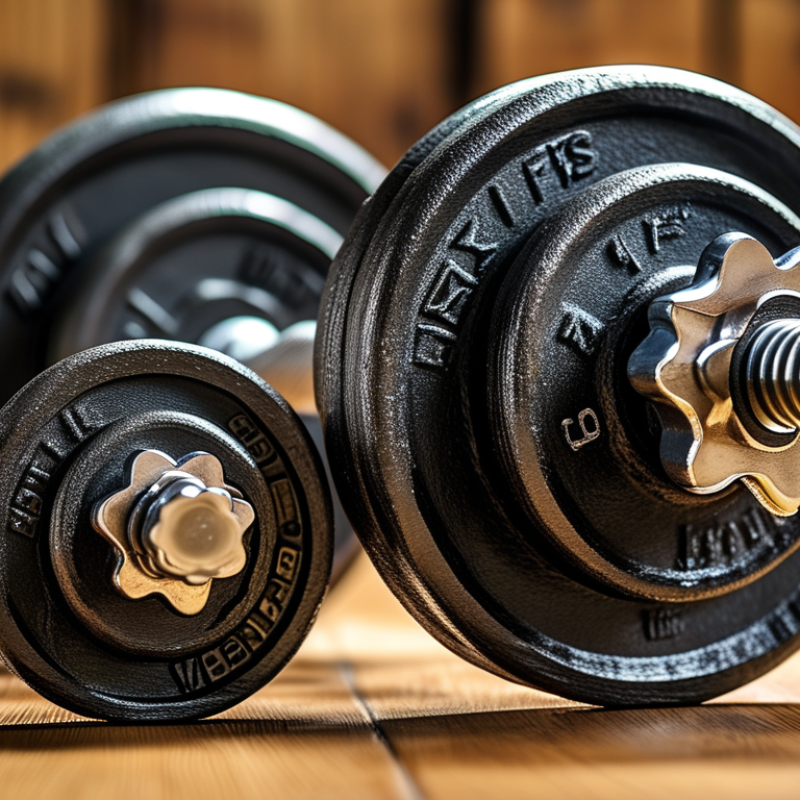
When choosing the perfect weight for home dumbbells, consider your fitness level and goals. According to the National Academy of Sports Medicine, beginners might start with weights between 5 to 10 pounds. This range allows for proper form without overwhelming the muscles. Those with experience may prefer 15 to 25 pounds for more strength-focused workouts.
Furthermore, assess your workout routine. If you engage in various exercises, you might need a range of weights. Compound movements like squats and deadlifts typically require heavier dumbbells. Isolation exercises, such as bicep curls, can use lighter weights. The American College of Sports Medicine suggests gradually increasing weight for optimal muscle growth.
Tips: Start with lighter weights to master your form. Focus on technique before adding more pounds. Regularly assess your strength and adjust your weights accordingly. Remember, the right weight today may not suit you in a few months. Challenge yourself, but avoid injury by listening to your body.
Choosing the right weight for home dumbbells is pivotal to achieving your fitness goals. Understanding your fitness level plays a crucial role. Beginners should start with lighter weights, perhaps around 5 to 10 pounds. This allows you to master your form without risking injury. As you progress, you can gradually increase the weight.
Tip: Focus on your body's feedback. If an exercise becomes too easy, it might be time to up the weight. However, don’t rush. It’s vital to maintain proper technique. This ensures that you engage the right muscles and avoid strain.
Consider your specific goals as well. Strength training for muscle gain often requires heavier weights. In contrast, if you aim for endurance, lighter weights with higher repetitions can be beneficial.
Tip: Set realistic benchmarks. Track your progress, but allow for fluctuations. Not every workout will feel fruitful, and that’s okay. Being aware of your baseline helps in effective planning. Listen to your body and adjust when necessary. This thoughtful approach can lead to sustainable growth and improvement in your routine.
When selecting the right weight for home dumbbells, the concept of progressive overload is crucial. This principle means gradually increasing the load on your muscles to challenge them. Without sufficient weight, your muscles adapt too quickly. They stop growing or becoming stronger.
It's important to start with weights that feel manageable. However, as your strength improves, you'll need to adjust. A common mistake is to stay with the same weight for too long. This can lead to plateaus. Recognizing when to increase your weight is fundamental. Aim for small increments to keep your body challenged.
Tips: Track your workouts and note your performance. If a weight feels too easy, it’s time to increase it. Listen to your body—it will guide you on when to push harder. Mix lighter days with heavier days to create variety. This keeps your routine engaging and helps prevent overtraining. Always prioritize form over weight; poor technique can lead to injury. Keep these tips in mind for a balanced approach to your strength training journey.
Choosing the right weight for your home dumbbells is crucial for effective workouts. This chart illustrates how the weight selection for dumbbells should progress as you adapt to training, highlighting the importance of progressive overload.
When selecting the right dumbbell weight, testing your abilities is crucial. According to a study published in the Journal of Strength and Conditioning Research, the optimal weight for beginners typically ranges from 5 to 15 pounds. This range ensures that you can maintain good form while building strength. Testing should include various exercises like bicep curls and shoulder presses to assess your comfort zone.
To determine your ideal dumbbell weight, start with lighter weights. Aim for a set of 10-15 repetitions, focusing on form. If the last few reps feel too easy, consider increasing the weight. Conversely, if you struggle to complete the set, the weight may be too heavy. Data from the National Academy of Sports Medicine suggests that failing to complete a set within the target range often indicates the need for adjustment.
A personal experience can guide your selection process. Many find that their choices vary with different exercises. For instance, a weight that feels appropriate for a chest press may be too heavy for lateral raises. It's essential to listen to your body and make periodic adjustments. Regularly testing and reflecting on your performance will lead to better decisions in choosing dumbbell weights over time.
| Fitness Level | Recommended Weight (lbs) | Test Method | Example Exercises |
|---|---|---|---|
| Beginner | 5-10 | Choose a weight you can lift for 12-15 reps with proper form. | Bicep Curls, Tricep Extensions |
| Intermediate | 10-20 | Select a weight for 8-12 reps, challenging but achievable. | Shoulder Press, Chest Fly |
| Advanced | 20+ | Test your max for 4-6 reps, ensuring safe lifting. | Deadlifts, Squats |
| Post-Rehabilitation | 2-10 | Begin with light weights and focus on form; gradually increase. | Row, Lateral Raises |
Choosing the right weight for home dumbbells involves careful consideration. Many beginners gravitate toward lighter options, assuming they can start slowly. However, this tendency may hinder progress. Lighter weights often lack the challenge needed to stimulate muscle growth. Picking a weight that feels manageable but still pushes your limits is crucial.
Another common mistake is selecting a fixed weight without considering future goals. Lifters often regret not investing in adjustable dumbbells. These allow you to increase weight as you build strength. Additionally, many people underestimate how quickly their strength increases. This can lead to stagnation if the weights do not evolve with your fitness level.
It’s important to pay attention to your form. Using too heavy a weight can lead to poor technique and increase the risk of injury. Focusing on proper execution, even with lighter weights, is vital. Reflect on your experiences regularly. Identify where you struggle and adjust your choices accordingly. A thoughtful approach will lead to better results over time.
: Beginners should start with weights between 5 to 10 pounds for safety and proper form.
Test your abilities by performing exercises like bicep curls. Listen to how your body responds.
If the last reps feel easy, it might be time to increase the weight for a challenge.
Using lighter weights can hinder progress and muscle growth, making it vital to push your limits.
Start lighter and focus on your technique to avoid injuries and improve your workout effectiveness.
No, different exercises may require different weights. Listen to your body and adjust accordingly.
Many underestimate how fast their strength improves, leading to stagnation with fixed weights.
Regularly assess your strength and comfort. Adjust weights as you progress in your fitness journey.
Choosing adjustable dumbbells allows for more flexibility as you build strength over time.
Reflecting on your struggles helps identify areas for improvement, leading to better weight choices.
When considering how to choose the right weight for home dumbbells, several key factors come into play. Understanding your current fitness level and goals is essential, as this will guide you in selecting a weight that challenges you without risking injury. It's also crucial to incorporate the principle of progressive overload, which suggests gradually increasing the weight to continue making gains. Testing different weights to discover your ideal starting point can help ensure effective workouts.
Additionally, be mindful of common mistakes, such as choosing weights that are either too light or too heavy, which can hinder your progress. By carefully evaluating these factors and avoiding pitfalls, you'll be better equipped to select the appropriate dumbbell weight that aligns with your fitness objectives, enhancing your home workout experience.

PNZ Fitness