A treadmill belt looks simple, yet its underside carries constant friction, heat, and pressure. Regular lubrication can reduce drag and protect the motor, rollers, and walking deck. However, too much lubricant may create slipping, belt migration, and residue near the motor. The correct method depends on the treadmill design, belt material, and manufacturer instructions.
The ASTM F2115 standard addresses motorized treadmill safety and performance, but it does not establish one universal lubrication schedule. That matters. Many online guides recommend fixed intervals without checking usage or belt condition. The 2024 ACSM Worldwide Survey confirms that fitness technology remains central to modern exercise habits, while IHRSA industry reports show continued global demand for commercial and home fitness equipment. More users mean more maintenance questions. In China’s equipment supply chain, technicians commonly inspect belt tension, deck dryness, noise, and current load before applying silicone lubricant.
So, How to lubricate a treadmill belt correctly? Start by disconnecting power and reading the equipment manual. Lift the belt gently, apply only treadmill-approved silicone beneath the center area, then walk slowly to distribute it. Never spray lubricant onto the visible walking surface. That shortcut can reduce traction.
Small details matter.
A dry deck may feel hot after several minutes. An over-lubricated belt may feel unusually loose. These signs deserve attention, not guesswork. I once treated lubrication as a routine task rather than a condition-based process. That assumption was incomplete. This guide therefore compares manufacturer guidance, workshop practice, and recognized industry standards. It also explains when cleaning, alignment, or professional inspection is safer than adding more lubricant.
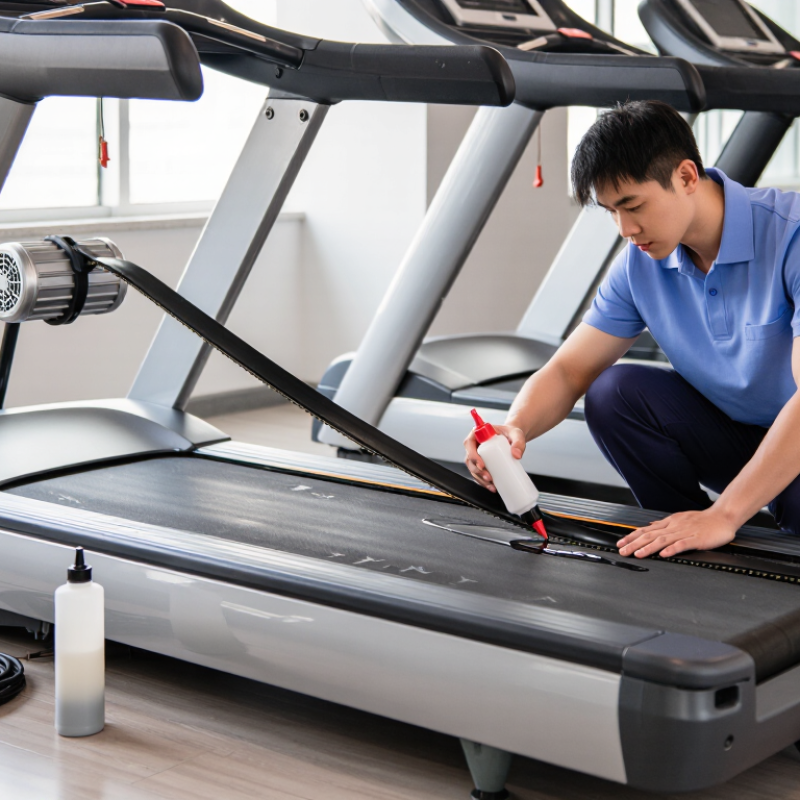
Identify whether your treadmill belt needs lubrication before applying anything. A dry belt often feels jerky underfoot. You may also hear squeaking, rubbing, or a rising motor pitch. Lift both belt edges and inspect the deck. It should feel smooth, not dusty or sticky. A faint silicone film may be normal. Excess oil is not better. It can reduce traction and reach the motor area.
The 2024 ACSM Worldwide Survey of Fitness Trends collected responses from nearly 2,000 fitness professionals. Wearable technology ranked first, showing how closely users now monitor exercise performance. However, screen data cannot confirm belt friction.
ASTM F2115, the consumer treadmill safety standard, supports following the equipment maker’s maintenance instructions. Check the manual before choosing silicone lubricant. Some belts require no lubrication. Others need a specific formula. A belt that slips may need alignment, not oil. I would not trust sound alone.
Tips: Unplug the treadmill first. Wipe visible dust from the deck. Apply a small, even amount beneath the belt. Never use penetrating oils or household grease. Run the machine slowly for several minutes. Walk gently afterward and check for slipping. If the belt remains hot, hesitant, or uneven, stop using it. This inspection may reveal a worn deck or loose tension. My earlier assumption was that every squeak meant dryness; that is not always correct.
Before lubricating a treadmill belt, collect the correct lubricant and prepare the machine carefully. Use treadmill-specific 100% silicone lubricant unless the service manual specifies a waxed, self-lubricating deck. Petroleum oil, cooking oil, and multipurpose sprays can damage belt materials and attract dust. ASTM F2115, the standard for motorized treadmill safety, emphasizes proper maintenance and safe operating conditions. It does not approve one universal lubricant.
Unplug the treadmill and let the deck cool completely. Clear the surrounding floor. Lift both belt edges gently, then remove dust with a dry, lint-free cloth.
Do not pour lubricant directly onto the walking surface. Apply the recommended amount beneath the belt, usually in two narrow lines along the deck’s center area. Excess lubricant creates a slippery surface.
A CPSC NEISS data report estimated more than 20,000 treadmill-related emergency-department injuries in one recent year. Preparation matters. Check belt alignment and unusual noises before restarting. Run the treadmill slowly for several minutes, then wipe away visible residue.
I sometimes apply too much during maintenance; that mistake increases slipping and collects debris. Read the manual twice. Waxed decks require different care.
How to Lubricate a Treadmill Belt Correctly China Top Guide?
Lift the Belt and Apply Lubricant in the Right Places
Unplug the treadmill before lifting the belt. Place one hand under the running surface, not near the rollers. Raise the belt gently by 5–8 centimeters. This gap usually allows accurate lubricant placement without overstretching the deck.
Apply a small, manufacturer-approved silicone lubricant beneath the belt, along the centerline. Use two narrow lines from the front area toward the middle. Do not coat the rollers, motor, or belt edges. Excess lubricant attracts dust and may create slipping. A 2023 maintenance review from the International Health, Racquet & Sportsclub Association reported that equipment upkeep remains a common operational concern in fitness facilities, where unnecessary downtime affects daily use. That supports careful, preventive maintenance rather than over-lubrication.
Lower the belt slowly, then walk at 3–5 km/h for three minutes. This spreads the lubricant across the deck. Listen for scraping or uneven movement. ASTM F2115, the safety specification for motorized treadmills, does not prescribe one universal lubrication interval, because belt materials and usage differ. Check the service manual instead. Light home use may need attention every three months, while heavy use requires more frequent inspection. I once applied too much lubricant and created belt drift. More is not better.
| Stage | What to Check or Do | Recommended Data or Position | Why It Matters | Important Caution |
|---|---|---|---|---|
| 1. Confirm the lubricant | Use a lubricant specifically approved for the treadmill running belt. | A non-petroleum, treadmill-compatible silicone lubricant is commonly used. | The correct formula reduces friction between the belt and deck without damaging belt materials. | Do not use motor oil, cooking oil, WD-type penetrating sprays, or automotive grease unless the equipment manual expressly permits it. |
| 2. Switch off safely | Turn the treadmill off, remove the safety key, and unplug the power cord. | Wait until the belt and rollers have stopped completely before lifting the belt. | This prevents accidental movement and reduces the risk of electric or mechanical injury. | Keep fingers, clothing, and tools away from the rollers and moving parts. |
| 3. Inspect the deck and belt | Check the walking belt and deck for dust, debris, fraying, cracks, or unusual wear. | Inspect both left and right sides under the belt, especially the central walking area. | Lubrication cannot correct a damaged belt, contaminated deck, or worn component. | Clean visible debris with a dry, lint-free cloth. Avoid saturating electrical parts. |
| 4. Lift the walking belt | Raise the belt gently from the side near the front or middle of the running deck. | Create enough space to place the applicator beneath the belt without forcing or sharply folding it. | The lubricant must reach the deck surface beneath the belt rather than only the visible top surface. | Do not apply lubricant directly to the top walking surface, side rails, motor, or rollers. |
| 5. Apply lubricant in the right places | Apply a narrow line or a small amount beneath the belt on the deck. | Distribute it lengthwise in the left and right inner running zones, avoiding the outer edges. | Even coverage helps reduce deck friction and prevents one area from becoming over-lubricated. | Follow the treadmill manual for the exact volume; excessive lubricant can cause belt slipping and residue buildup. |
| 6. Spread the lubricant | Lower the belt and rotate it manually for several turns, or use the treadmill at low speed if the manual allows. | Aim for a thin, even film across the main belt-and-deck contact area. | Movement distributes the lubricant and helps reveal any concentrated wet spots. | Keep the treadmill unloaded during the initial spreading process. |
| 7. Wipe excess lubricant | Wipe any lubricant that reaches the side rails, belt edges, or floor. | The walking surface and side rails should feel clean and dry before use. | Excess lubricant can make the belt slippery and may attract dust. | Never walk on a visibly oily belt. |
| 8. Test the treadmill | Reconnect power, start at a low speed, and observe the belt before normal exercise. | Check for smooth movement, tracking, slipping, unusual noise, or lubricant spray. | A controlled test confirms that the belt is operating safely after maintenance. | Stop immediately if the belt slips, drifts, makes grinding sounds, or shows abnormal resistance. |
| 9. Set a maintenance schedule | Track usage, cleaning, lubrication, and belt condition in a maintenance log. | Lubrication frequency varies by model, user weight, climate, and weekly operating hours; the manual takes priority. | A usage-based schedule is more reliable than applying lubricant on a fixed date for every treadmill. | If the manual gives no interval, inspect the belt and deck regularly and seek qualified service advice when friction or noise increases. |
Correct lubrication begins with preparation. Unplug the treadmill and remove the safety key. Check the owner’s manual before choosing any lubricant. Most walking belts require a treadmill-specific silicone formula, not household oil. Household oil can damage the deck and attract dust.
Lift the belt gently near the center, without forcing its edge. Apply a thin line of lubricant lengthwise under the belt. Repeat on the opposite side. Do not pour lubricant directly onto the walking surface. Lower the belt, then walk slowly for three to five minutes. This movement spreads the lubricant across the deck. Keep the speed low. High speed can leave dry areas untouched.
Stop the machine and inspect both sides. Look for wet patches, squeaking, or lubricant pushed toward the front roller. A dry strip suggests uneven coverage. Too much lubricant can make the belt slip and collect debris. Wipe away visible excess with a clean, dry cloth. The process is not perfectly tidy. I still recheck alignment after lubrication, because a belt may drift slightly during testing. Follow the service interval in the manual, but shorten it when the treadmill operates in a dusty room or receives heavy daily use. Proper distribution matters more than simply adding more lubricant.
After lubricating a treadmill belt, test the machine before normal exercise. Remove the adjustment tools and keep the running area clear. I set the speed to the lowest level and watch the belt for two minutes. It should move smoothly without slipping, squeaking, or drifting sideways. Stop immediately if the motor sounds strained or the belt jerks.
Check the belt surface and deck after testing. A thin, even lubricant layer is better than excess fluid, which can collect dust and reduce traction. Use only the lubricant type specified in the equipment manual. Wipe away any visible residue from the side rails and floor. Record the lubrication date, running hours, belt tension, and unusual sounds in a simple maintenance log.
Create a schedule based on usage, room conditions, and the manufacturer’s instructions. A lightly used home treadmill may need inspection each week and lubrication every few months. Heavy use, dusty rooms, or several users may require more frequent checks. Test the machine after every adjustment.
My first schedule was too rigid. It ignored seasonal dust and increased holiday use. Now I review the log monthly and change the interval when symptoms appear. That approach is less tidy, but more realistic. Do not wait for loud noise. A small change in belt movement can reveal a developing problem.
This typical preventive schedule uses calendar intervals for routine treadmill care. Clean debris and inspect belt alignment weekly, check belt tension monthly, lubricate according to the treadmill manual, and inspect the motor area every six months. After lubrication, test the treadmill at low speed first and confirm smooth belt movement before normal use.
A dry belt may feel jerky underfoot. You might hear squeaking or rubbing. The motor pitch may also rise. Lift both edges and inspect the deck. It should feel smooth, not dusty or sticky.
No. Some belts need no lubricant. Others use silicone or different maintenance systems. Check the service manual carefully. Do not assume every belt needs oil.
Use treadmill-specific 100% silicone lubricant, unless the manual says otherwise. Waxed or self-lubricating decks need different care. Avoid petroleum oil, cooking oil, household grease, and multipurpose sprays.
Unplug the treadmill completely. Let the deck cool. Clear dust from the surrounding floor. Wipe the deck with a dry, lint-free cloth. Check alignment and unusual sounds before restarting.
Lift both belt edges gently. Apply a small, even amount beneath the belt. Two narrow lines along the deck’s center area may be enough. Never pour lubricant onto the walking surface.
Use only the recommended amount. Excess lubricant can reduce traction. It may also reach the motor area and collect dust. More is not better.
Keep the treadmill unplugged during application. Then run it slowly for several minutes. Walk gently afterward. Check for slipping. Wipe away visible residue.
Yes. Slipping may indicate poor alignment, loose tension, or deck wear. Lubrication is not a universal fix. I once treated every squeak as dryness. That assumption was wrong.
Stop if the belt remains hot, hesitant, or uneven. Also stop when slipping continues. A worn deck or loose tension may be involved. Have the machine inspected before exercising again.
Learning how to lubricate a treadmill belt correctly? Start by checking whether lubrication is actually needed. Signs may include unusual noise, a dry or sticky running surface, or increased friction during use. Before beginning, switch off and unplug the treadmill, remove any objects from the deck, and select a lubricant specifically designed for treadmill belts. Avoid household oils or unsuitable products, as they may damage the belt or create a safety risk.
Carefully lift the belt from both sides and apply a small, even amount of lubricant beneath it, focusing on the central walking area rather than the edges. Lower the belt and run the treadmill at a slow speed for several minutes so the lubricant can spread across the deck. Wipe away any excess and test the machine gradually. To keep performance stable, inspect the belt regularly and establish a maintenance schedule based on usage, operating conditions, and the treadmill manufacturer’s general recommendations.

PNZ Fitness